
Odorous emissions: what they are and why they should not be underestimated
On a farm, at a biogas plant or in a production facility, there is an aspect that is less obvious than the waste generated, but which often has a significant impact: that of odour emissions.
By this term, we mean atmospheric pollutants produced by industrial or agricultural activities that generate unpleasant, irritating or harmful odours. These emissions can become a serious problem when they are persistent and spread beyond the boundaries of the facilities.
To gain a better understanding of the subject, it is helpful to distinguish between:
- odorous substances: compounds which, whilst not necessarily hazardous, may be unpleasant;
- smell perception: the sensation resulting from the interaction between odour molecules and olfactory receptors;
- odour nuisance (or olfactory nuisance): this occurs when the perception of an odour has a tangible adverse effect on a person’s well-being.
Talking about odorous emissions therefore does not simply mean talking about “bad smells”, but rather about a broader phenomenon of odour pollution: a causal chain that begins at the source (the presence of odorous substances), continues through diffusion, and culminates in potential odour nuisance.
Why odours in the factory pose an operational and reputational risk
Controlling odour emissions is not just an environmental issue, but also a matter of risk management and social well-being.
From a regulatory perspective, the current national benchmark is theArticle 272-bis of the Legislative Decree 152/2006, which provides that regional legislation or authorisations may introduce measures to prevent and limit odour emissions. In addition, there are the implementation guidelines approved by a directorate decree of 28 June 2023, published in the Official Gazette on 10 July 2023.
But the issue is not merely a regulatory one. Unpleasant odours can lead to complaints, inspections, strained relations with local residents and a negative perception of the company. In other words, the odour problem is not confined to the plant itself: it can quickly become an operational, relational and reputational issue.
Where do odour-causing emissions come from?
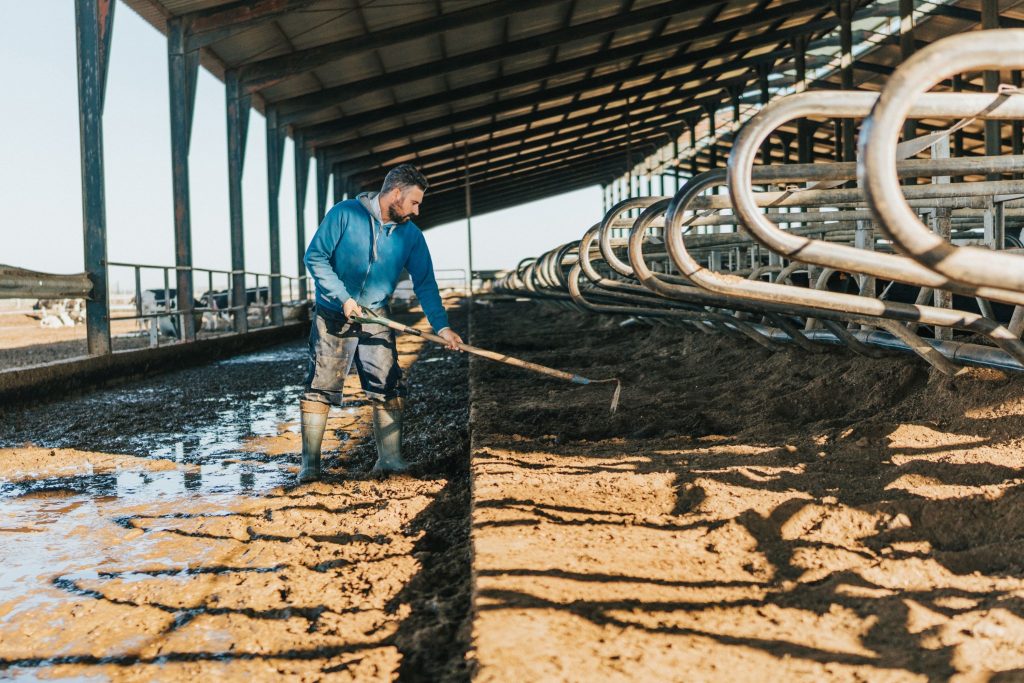
In industrial plants, and particularly in waste management, odourous emissions almost always arise from the interaction between the material being processed and the conditions under which it is treated. Wastewater, sludge, sewage, digestate and organic waste can, in fact, produce odours of varying intensity depending on retention times, storage methods, handling and the stability of the process. For this reason, odour is almost never the result of a single critical point, but rather the effect of a balance that shifts across various operational stages.
In some cases, emissions are channelled and captured using dedicated systems; in others, they are released diffusely from open tanks, storage areas or treatment surfaces, making them more difficult to control.
The composition also varies depending on the matrix: the substances most commonly found include sulphur compounds, nitrogen compounds such as amines, oxygenated compounds such as aldehydes, ketones and volatile fatty acids, as well as certain odorous hydrocarbons.
Rather than from a single event, therefore, odour emissions often stem from the complex management of the system as a whole.
Odorous emissions: what are the regulations in Italy?
Until a few years ago, there was no specific national framework governing odour emissions. Today, the main reference is Article Article 272-bis of the Legislative Decree. 152/2006.
The national context
The new Article 272-bis assigns a central role to the regions and competent authorities in defining measures to prevent and limit odour emissions, with the option to introduce: limit values, maximum flow rates or maximum concentrations, procedures, and any containment plans.
There is, therefore, no single approach that is equally suitable for every plant and every region, as the situation also depends on licensing requirements and regional guidelines.
For a company, therefore, the right question is not just “what is the regulation?”, but also “how does it apply to my plant, my production process and my regulatory context?”.
The role of regional guidelines
The issue of odour emissions is also addressed at a regional level through regional guidelines and policies, which play a very practical role in the authorisation process and technical assessments.
In Lombardy, for example, sector-specific guidelines have been published for the characterisation, analysis and authorisation of odour-causing emissions. These are recognised as the most comprehensive reference on the subject of odour emission control.
In Piedmont, the “Guidelines for the characterisation and control of atmospheric emissions from odour-generating activities” are in force, providing an operational framework for addressing the issue in the context of licensing and management.

More generally, the issue is also becoming clearer in other regions. In Friuli Venezia Giulia, for example, the value of the national guidelines approved in 2023 has been highlighted as a useful framework for the investigations and decisions of the competent environmental authorities.
The aim is precisely to move beyond overly fragmented approaches and to provide agreed criteria for assessing odour emissions, both in the licensing process and in the management of any critical situations that may arise during operations.
In this sense, the regional guidelines do not replace the national framework, but make it more practical.
How to assess the problem in a quantifiable way
As we have mentioned, odour emissions do not consist solely of ‘unpleasant odours’; for this reason, it is necessary to carry out a comprehensive and causal assessment of the sequence: emission ➡️ odour perception ➡️ odour nuisance.
The issue of odours should therefore not be addressed solely from a perceptual perspective, but through a measurable approach.
Measurement, monitoring and analysis
The UNI EN 13725:2022 standard defines the objective method for determining the odour concentration of a gaseous sample using dynamic olfactometry. It is an important reference as it enables a seemingly subjective phenomenon to be transformed into a more easily interpretable technical datum.
But measurement alone is not enough. We also need to link the data to process events: when the odour appears, at which stages, with which feedstocks, with which residence times, and with which operational variations. This is where monitoring really comes into its own.
How to reduce odour emissions through concrete and measurable measures
Reducing odour emissions does not simply mean taking action once the odour is already noticeable. It means working upstream on managing the source and the process, and thus on the conditions that contribute to the problem’s formation and spread.
Organisational and process-related measures
A significant part of reducing odour-causing emissions involves organisational and managerial measures: reducing retention times, improving storage and handling, monitoring operating conditions, and minimising situations that encourage instability, fermentation or degradation. In many cases, this alone is enough to reduce the risk.
Plant engineering works
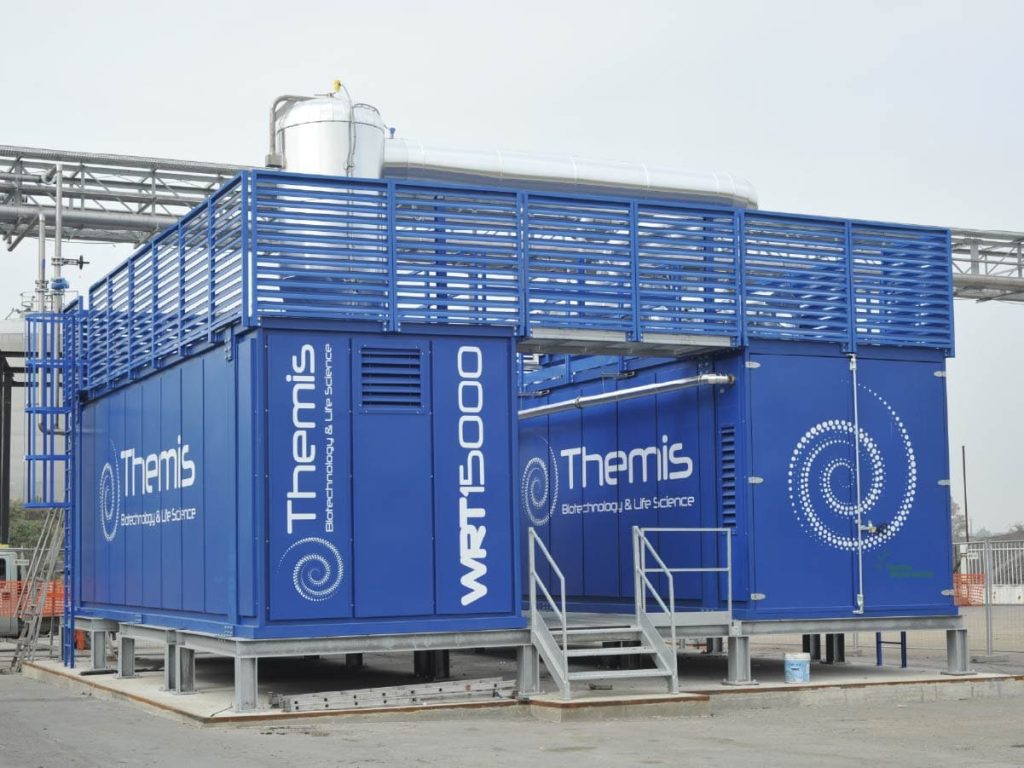
When organisation alone is not enough, engineering measures come into play: source containment, collection, emission treatment, as well as volume reduction and matrix stabilisation.
In this regard, Themis works with wastewater, sludge, digestate and organic waste, starting with preliminary analyses, pilot plant trials and bespoke design, with the aim of making the feedstock more manageable and the process more stable.
The most common mistakes to avoid
Typical errors are quite common; among the most frequent issues in the management of odour emissions are:
- waiting for reports before taking action, rather than acting preventively;
- treating different matrices as if they behaved in the same way, without taking into account their specific characteristics and critical issues;
- looking for a standard solution to a problem that often requires a bespoke analysis;
- treat odours as a separate issue from the rest of waste or effluent management;
- focus solely on the end result, without interpreting the smell as a possible sign of a sub-optimal process.
In many cases, in fact, the odour problem is not an isolated incident, but a sign that the process balance is not working as it should.
How can we tackle odour emissions?
Odour emissions are not merely a side effect to be contained. They are an indicator that can reveal a great deal about how a plant manages complex processes, timelines, volumes and operating conditions.
This is why odour issues cannot truly be resolved if they are treated as an isolated problem. They must be viewed as part of the management of the production environment and the process. Only in this way is it possible to effectively reduce operational, regulatory and reputational risks.

And it is precisely in this context that an approach such as Themis’s makes sense: analysing, testing, designing and taking action on the actual situation, with solutions tailored to the process itself rather than merely addressing the visible symptoms of the problem.
FAQ
What are odour-causing emissions?
These are emissions into the atmosphere that contain substances capable of producing an odour, which is sometimes unpleasant or offensive.
What are the most common odorous substances?
Among the most common are sulphur compounds, amines, aldehydes, ketones, volatile fatty acids and other odour-producing organic compounds.
What is olfactory dysfunction?
It is a condition in which a perceived odour affects a person’s well-being and is experienced as unpleasant or bothersome.
Are offensive odours a criminal offence?
Not always. However, they may give rise to disputes, audits and administrative findings or, in certain cases, have legal implications depending on the specific context and the effects they produce.
What are the limit values for odour emissions?
There is no single national limit that applies uniformly to all cases. The situation depends on permits, regional regulations and the criteria applicable to the individual plant.