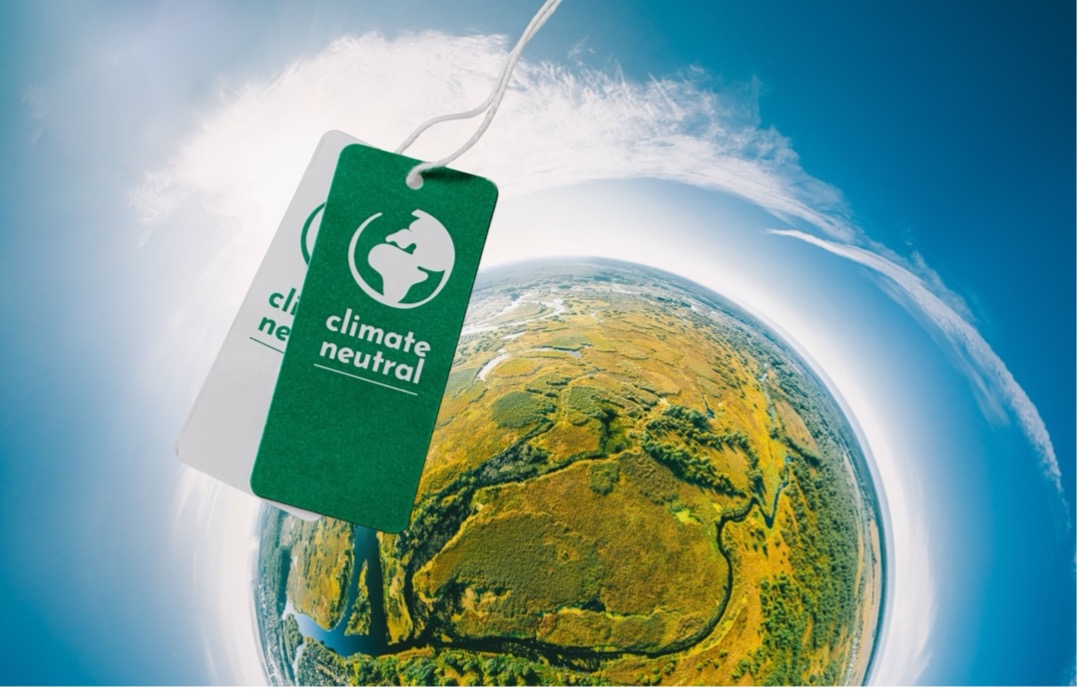
Climate neutrality by 2050 is not just a European environmental goal. It is a gradual transformation of the way businesses produce, consume resources, and manage energy, water, waste, and byproducts.
For many industrial companies, aiming for climate neutrality by 2050 means looking beyond direct emissions and beginning to address what happens downstream of the production process: sludge, wastewater, process water, organic waste, industrial residues, and materials that are often viewed solely as operational costs.
In this context, the circular economy becomes a concrete tool for decarbonization. Not because it can single-handedly replace a climate strategy, but because it helps reduce waste, recover resources, limit the volume of waste to be disposed of, and make the entire production cycle more efficient.
What does “Climate Neutral by 2050” mean?
The European Union aims to become climate-neutral by 2050, that is, to achieve an economy with net-zero greenhouse gas emissions. This goal is at the heart of the European Green Deal and has been made legally binding by the European Climate Law. The same legislation also sets interim targets, including a reduction in net greenhouse gas emissions of at least 55% by 2030 compared to 1990 levels.
Climate neutrality does not mean eliminating all emissions entirely, but rather reducing emissions from economic activities as much as possible and offsetting the remaining emissions through absorption or removal.
Climate neutrality, carbon neutrality, and net zero: the differences
In everyday language, terms such as “climate neutrality,” “carbon neutrality,” and “net zero” are often used. They are not always exactly interchangeable. Carbon neutrality focuses primarily on CO₂, while climate neutrality and net zero take a broader view of all greenhouse gases and the overall balance between emissions and removals.
For businesses, however, the bottom line is clear: the trend in Europe is toward production models that are more measurable, efficient, and less reliant on resources that are wasted or managed in a linear fashion.

Climate Neutral 2050: why Businesses Must Act Now
The year 2050 may seem far off, but for industry, the transition has already begun. European climate goals are influencing regulations, investments, supply chains, ESG criteria, access to credit, tenders, procurement, and stakeholder expectations.
Companies are no longer judged solely on what they produce, but also on how they produce it. This means greater attention to:
- emissions measurement;
- process traceability;
- energy consumption management;
- water use and conservation;
- waste generation and treatment;
- ESG reporting;
- accountability throughout the supply chain.
Decarbonization, therefore, is not merely about purchasing renewable energy or offsetting emissions. It requires a broader review of industrial processes, starting with the least-utilized streams: wastewater, sludge, byproducts, wash water, organic waste, and processing residues.
This is where many companies can identify real opportunities for improvement. Reducing waste, reclaiming water, recycling dry waste, or cutting down on transport to disposal sites means taking concrete, measurable steps that contribute to both sustainability and competitiveness.
The Circular Economy and Decarbonization: an Operational Link
The circular economy contributes to decarbonization by reducing reliance on virgin raw materials, minimizing waste, and making resource use more efficient. The European Environment Agency notes that circular strategies have significant potential for climate mitigation, although the measurement of benefits can vary depending on the sector, methodology, and scope of analysis.
For an industrial company, this connection translates into very concrete actions.
Less waste means less strain on logistics, processing, and disposal
Reducing waste volumes means easing the burden on storage, handling, transportation, and disposal. Recovering treated water can reduce the withdrawal of raw water and promote internal reuse. Recovering by-products and residues, when technically and legally feasible, can turn a cost item into a resource.
Circularity is therefore not an abstract concept. It is a way of designing a process: understanding what goes in, what comes out, what can be recovered, what can be reduced, and what data can demonstrate this.
Industrial waste, wastewater, and sludge: where part of the transition is taking place
Many production processes generate complex effluents: these streams often pose significant technical and economic challenges. They may have high water content, chemical and physical variability, odors, instability, storage difficulties, treatment costs, and stringent regulatory requirements.
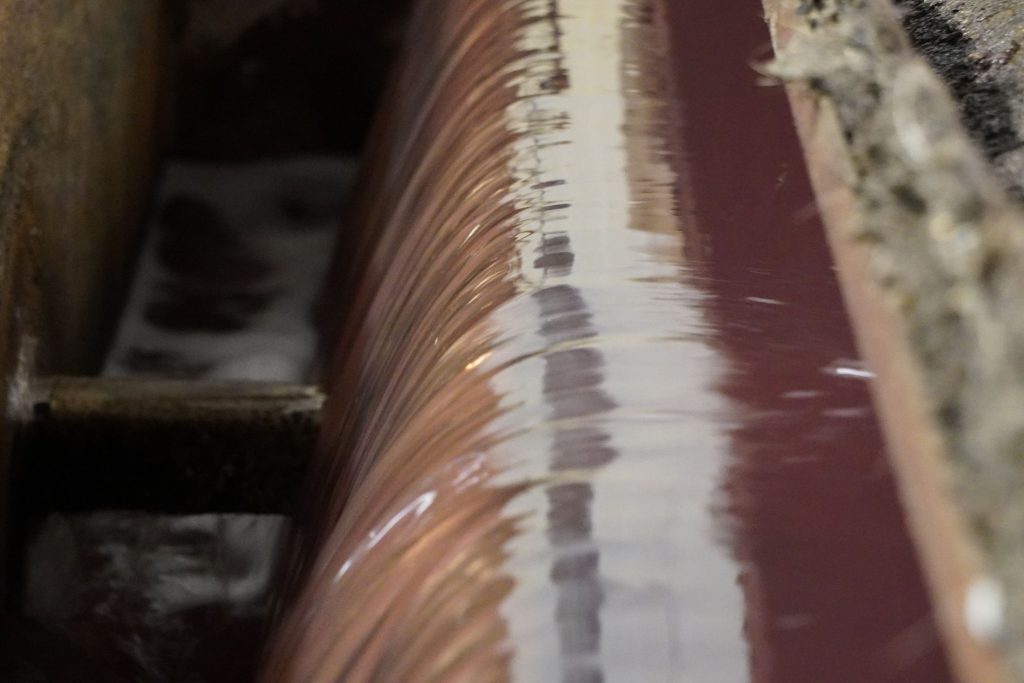
From a climate-neutral perspective, it is necessary to develop a more efficient system for managing the byproducts of the process.
Themis was founded with this very mission in mind: to develop and manufacture machinery and processing systems designed to reduce and repurpose industrial waste, in line with the principles of sustainability and the circular economy.
Water recovery and volume reduction: two concrete industrial strategies
Water is one of the most critical aspects of the industrial transition. Much of the wastewater and sludge consists largely of water. Continuing to treat these as waste to be transported and disposed of means that a significant portion of a potentially recoverable resource is also being transported.
The reuse of treated or distilled water can help:
- reduce primary water consumption;
- contain liquid discharges;
- support internal reuse models;
- improve the plant’s water resilience;
- make wastewater management more efficient.
This approach also underlies Zero Liquid Discharge models, in which the goal is to recover and reuse treated water within the process, thereby reducing or eliminating liquid discharge.
Alongside water, there is the issue of solid waste. When waste is stabilized, dried, or converted into a more manageable form, it can reduce the volume of waste to be disposed of and, in some cases, open up opportunities for recovery.
How Themis WRT supports businesses
On the path to carbon neutrality, one of the most challenging aspects for businesses is managing the waste streams generated downstream of the production process: sludge, wastewater, organic waste, wash water, industrial residues, and byproducts that are difficult to manage.
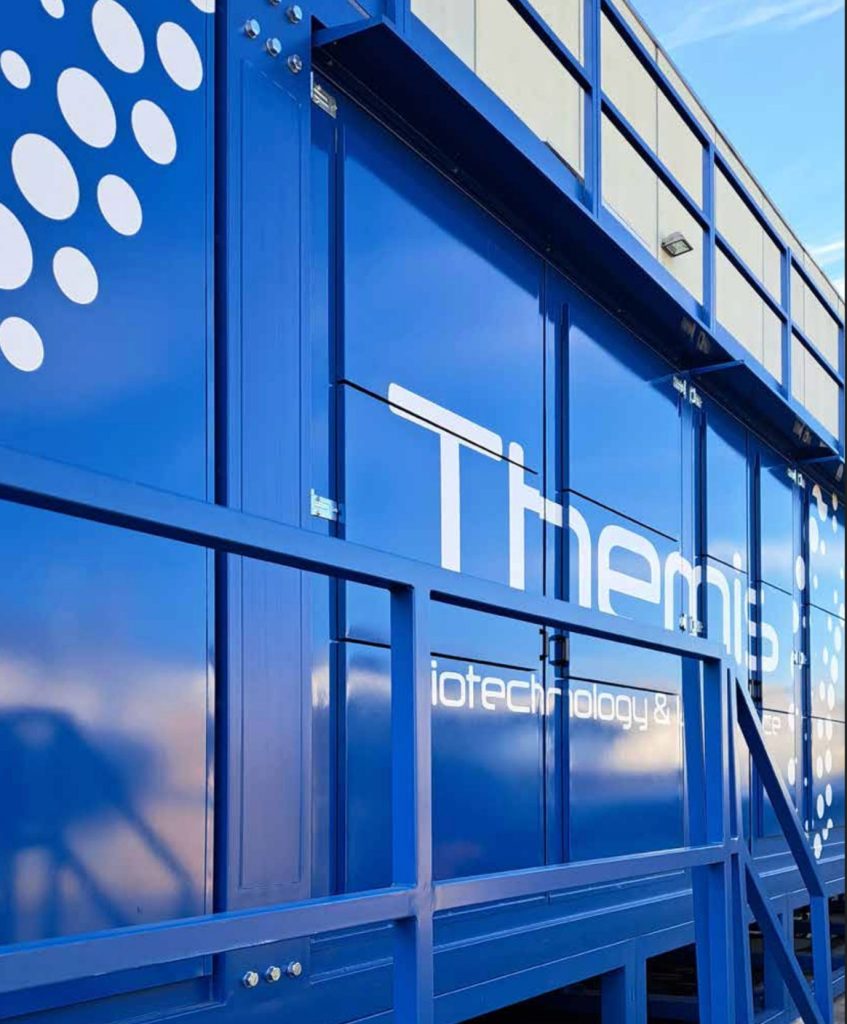
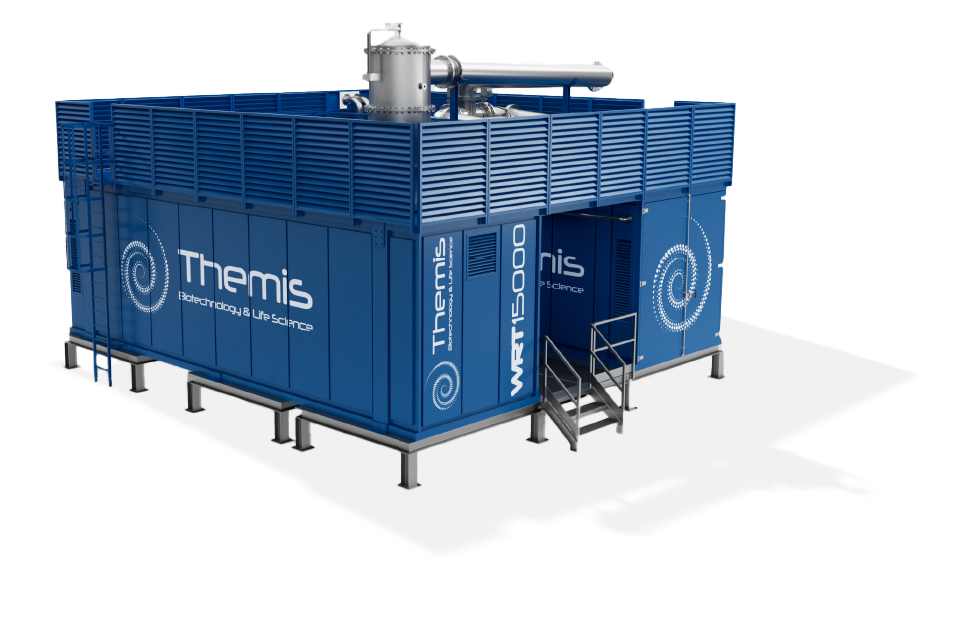
Themis WRT, Waste Recovery Technology, is a patented technology designed to treat, reduce, and recover value from these industrial wastes through a multi-process system that integrates vacuum evaporation, vapor condensation, mixing, and biotechnological additives.
Every type of wastewater or waste has specific characteristics: water content, composition, viscosity, concentration, stability, presence of contaminants, and recovery potential. That is why Themis begins by analyzing the feedstock, conducting preliminary tests, and performing validations in a pilot plant, in order to technically assess what results are actually achievable and create a tailor-made solution.
In industrial terms, this means taking concrete action on specific areas:
- less volume to transport and dispose of;
- recovery of distilled water for reuse in processes, where possible;
- reduction in logistical and operational pressure;
- greater control over waste streams;
- the possibility of utilizing the dry residue or granules, when technical and regulatory conditions permit;
- integration with Zero Liquid Discharge models;
- utilization of heat carriers already present in the plant, such as hot water, steam, or waste heat.
The contribution to climate neutrality, therefore, should not be understood as a direct promise to “eliminate” emissions. It is more accurate to view it as a contribution to reducing waste and improving process efficiency: fewer resources wasted, less material to be managed as waste, greater opportunities for recovery, and more measurable environmental management.
In this sense, Themis WRT helps companies shift their perspective. Waste is not treated merely as a problem to be eliminated, but as a resource to be understood, transformed, and, where possible, put to good use.
Climate neutrality: an industrial strategy, not a single technology
The path to carbon neutrality cannot rely on a single solution. It requires measurement, data, energy efficiency, responsible resource management, waste reduction, traceability, and technological choices that align with the actual characteristics of production processes.
For businesses, the challenge is to shift from a linear approach to a more circular one: not just producing, processing, and disposing of materials, but analyzing what can be recovered, reduced, reused, or repurposed.
To move closer to achieving climate neutrality by 2050, companies will also need to focus on an area that is often overlooked until it’s too late: the waste, effluents, and residues that their processes generate every day.
Would you like to learn more about how to make your processes more carbon-neutral? Fill out the contact form and let’s discuss it together.
FAQ
What does “Climate Neutral by 2050” mean?
This means achieving a balance by 2050 between greenhouse gas emissions generated and those absorbed or removed. For the European Union, this goal is at the heart of the Green Deal and is legally binding under the European Climate Law.
What is the difference between climate neutrality, carbon neutrality, and net zero?
Carbon neutrality primarily involves balancing CO₂ emissions. Climate neutrality and net zero have a broader scope, as they take into account all greenhouse gases and aim for an overall balance between residual emissions and removals.
What steps should businesses take to prepare for carbon neutrality?
They must measure emissions, make processes more traceable, reduce waste and consumption, improve the management of energy, water, waste, and raw materials, and incorporate reliable environmental data into their ESG reporting.
What is the connection between the circular economy and decarbonization?
The circular economy contributes to decarbonization by reducing the consumption of virgin raw materials, minimizing waste, and improving the recovery of materials and resources. This can reduce emissions associated with extraction, production, transportation, and disposal.
How can industrial waste management reduce environmental impact?
It can reduce the environmental impact by decreasing the volume of waste to be disposed of, minimizing transportation and handling, recovering water and useful materials, improving the stability of residues, and repurposing certain waste streams when technically and legally feasible.
How can Themis WRT help businesses on their path to carbon neutrality?
Themis WRT can support businesses by reducing the volume of sludge, wastewater, and waste; recovering distilled water; producing a dry or granulated output; potentially repurposing residues; and providing customized solutions based on matrix analysis, testing, and validation in a pilot plant.