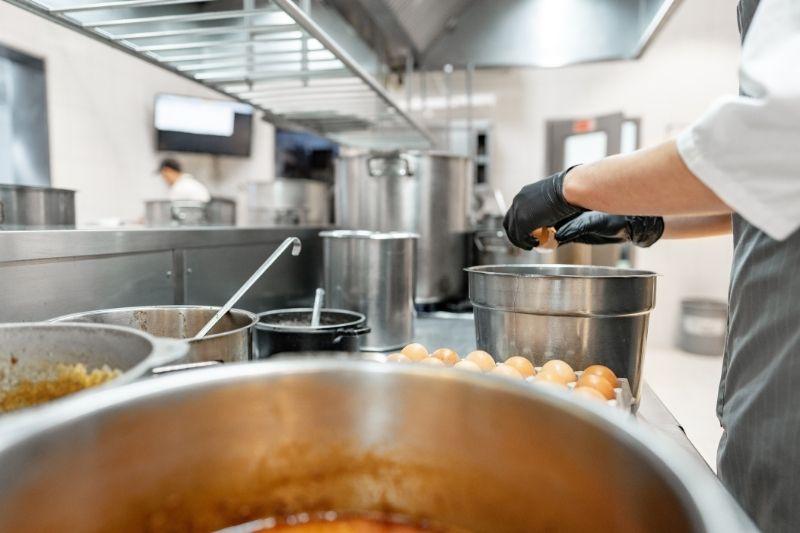
Organic waste management in the hospitality industry is a daily challenge for hotels, resorts, restaurants, and all other establishments in the hospitality sector. Buffets, breakfasts, banquets, and in-house catering generate significant volumes of waste, which are often difficult to manage.
Between storage space, handling costs, disposal, and regulatory obligations, waste becomes an item that weighs exponentially on the efficiency and profitability of the facility, as well as on ESG KPIs.
This requires a change in approach: treating and valuing the workforce on site, transforming an operational problem into a flow that is easier to manage and into resources.
In this article, we explain why this paradigm shift not only makes companies compliant, but also generates economic benefits.
Organic waste management in hotels: regulations and daily challenges
Regulatory requirements for the hospitality sector
In the hotel industry, numerous general rules on hygiene and waste management impose increasingly stringent restrictions in Italy and Europe.
In Italy, the Legislative Decree 75/2010 152/2006 Regulation of waste classification and traceability, with obligations to deliver waste to authorized operators and provide correct documentation; certain types of waste (e.g., used oil and animal by-products) are subject to specific rules.
At UE level, the Reg. (CE) 852/2004 requires food waste to be managed in such a way as to prevent contamination (prompt removal, sealable containers, and clean, protected storage areas, in line with HACCP). Furthermore, Directive 2018/851 has reinforced the need to separate organic waste and send it for recycling/separate collection without mixing it with other waste.
Operating costs and operational challenges
In everyday hotel life, however, it is not just a matter of compliance. The workforce has three characteristics that make it “expensive” to manage:
- It is bulky, damp, unpleasant: it takes up space, requires containers, cleaning, and adequate collection frequencies.
- It is discontinuous: volumes change according to seasonality, events, and occupancy (buffets and banquets are natural amplifiers).
- It has indirect impacts: more pickups and transports mean higher costs and, often, greater environmental impacts along the chain (a relevant issue when reporting ESG objectives).
The result? Even with proper separate collection, the facility continues to incur logistics and disposal costs, with limited scope for optimization.
Traditional solutions vs. innovative systems for hotels
The most common solutions (separate collection, delivery to waste management companies, initiatives to reduce waste such as donations, anti-waste platforms) are important and often necessary. But they have a structural limitation: they do not solve the need for waste management.
In other words: you can reduce upstream, but what remains still requires containers, storage, collection, transport, and traceability.
WRT-X: the compact solution for food waste regeneration
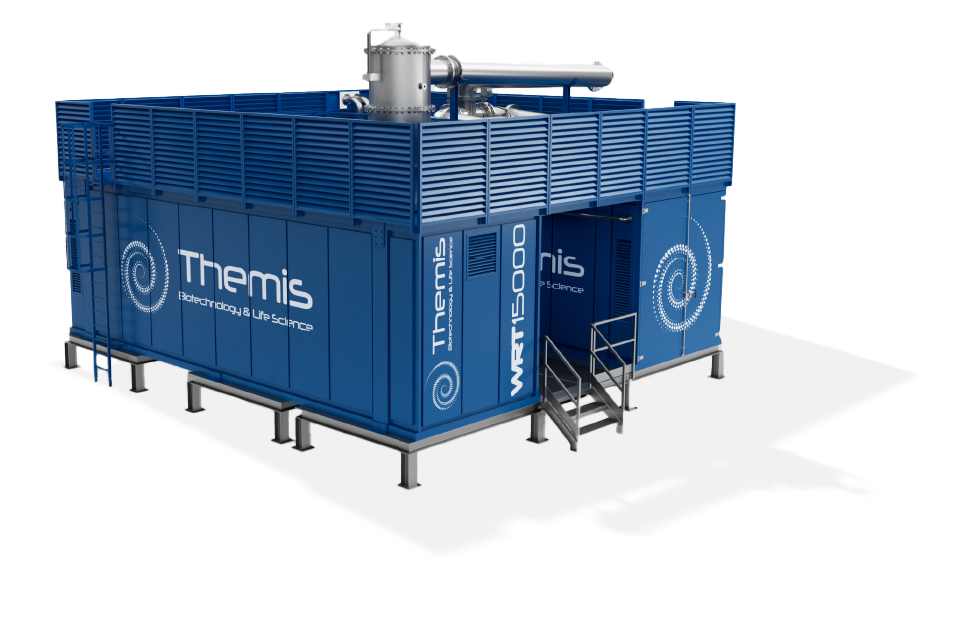
WRT-X is a compact solution from Themis, a system designed for the on-site treatment of organic food waste.
WRT-X transforms vegetable, animal, or mixed waste into valuable opportunities, generating 100% reusable resources.
But how does it work?
The regeneration process with WRT-X takes place in two stages:
- Enzymatic degradation
Through heating, low-temperature dehydration, and the use of Zyme+ enzymes, waste is broken down, making the material easier to separate. - Physical separation into two fractions
Dehydrated solid fraction: a solid, stabilized organic substance, recommended as a soil conditioner/biostimulant.
Distilled liquid fraction: reusable in production processes or safely returned to the water cycle.


WRT-X advantages for hospitality: economy and sustainability
In hospitality, two things matter above all else: taking up little space and not complicating work in the kitchen. WRT-X was created with this logic in mind: it is compact and integrates into service areas, even when space is limited.
The goal is to make waste management more orderly and predictable: waste is disposed of easily, the system works automatically and returns materials that are easier to manage, reducing bulk, handling, and the typical problems associated with storing wet waste.
So what are the concrete advantages of WRT-X?
Reduction in management and disposal costs
With WRT-X, workforce management becomes simpler and more economical: by processing waste directly on site, storage, handling, and internal logistics are reduced.
Furthermore, it reduces the need for frequent collections, with immediate benefits in terms of costs and operations: less transport, less complexity, and less time required for staff to manage wet waste.
Generation of economic value
The outputs of WRT-X can be a source of new opportunities: the final product can be reintegrated into processes or even transformed into a secondary raw material and economically valorized in a new life cycle. This approach allows us to think in terms of rapid payback time, because the benefits are not only environmental: they are also operational and economic.
More sustainability
Reducing waste production and landfill use means moving closer to a circular economy model, in line with the ESG objectives of the hospitality industry. WRT-X supports this approach because it allows organic waste to be treated efficiently and with low energy consumption, also helping to reduce emissions linked to transport and traditional management.
Regulatory compliance
WRT-X is designed in full compliance with environmental regulations relating to the treatment of organic waste. For hospitality establishments, this means being able to rely on a system designed to work in an orderly and controlled manner, integrating with internal procedures and the management and traceability requirements typical of a professional kitchen.
How to implement WRT-X in your facility
Installing WRT-X is simple, but tailored to your needs:
- Analysis of current waste: types, average volumes, peaks (events, seasonality).
- Calculation of current costs: disposal, logistics, collection frequencies, man-hours.
- Assessment of spaces and flows: where it fits seamlessly into the back of house.
- Installation and commissioning: operational setup and essential training.
- ROI/ESG monitoring: clear KPIs (volumes processed, reduction in withdrawals, estimated environmental impact).

Would you like to find out if WRT-X is suitable for your facility?
Contact us for an assessment based on actual flows, available space and economic/ESG objectives.
FAQ
What type of waste can WRT-X process?
Organic food waste, including different types (vegetable/animal/mixed), with programmes that can be selected based on the material.
Does WRT-X reduce the volume of food waste?
Yes, because it transforms and separates organic waste into more manageable outputs, reducing pressure on storage and handling.
What do I get at the end of the process?
Two fractions: a solid dehydrated (stabilised) fraction and a liquid distilled fraction, which can be handled according to the applicable conditions and uses.
Zero waste solutions for hospitality?
A zero waste approach combines prevention (waste reduction), proper collection and solutions that make the most of unavoidable waste. WRT-X fits into this last part, bringing treatment closer to the source.
How can waste production be reduced in hotels?
Take action on three fronts: prevention (more targeted purchasing and portions, buffet optimisation), making use of surpluses where possible (donations/partnerships) and efficient management of unavoidable waste with proper separation and solutions that reduce storage and logistics.