One of the most important challenges facing companies today is waste management: an issue that directly impacts operating costs, plant continuity and regulatory compliance, and which is receiving increasing attention from customers and supply chains.
In this scenario, disposal can no longer be the only answer. Alongside waste management, more and more companies are adopting a waste recovery approach: reducing volumes, simplifying management and recovering resources where possible.
Choosing to be part of a green economy is no longer a choice, but an opportunity.
Who is Themis and why is it leading the transition to the Circular Economy
Themis S.p.A. is an Italian company with a strong international presence, founded in 2018 to bring about the transition to more sustainable production models, with an approach geared towards the Circular Economy. Themis designs and manufactures engineering solutions, machinery and technologies for the treatment and recovery of waste and complex matrices, with a clear objective: to restore waste to its potential.
A concrete vision: making what is currently unsustainable sustainable
Stringent regulations, rising operating costs and pressure on sustainability and compliance are making one thing increasingly clear: the current production model is no longer sustainable.
The transition to the Circular Economy is desirable and necessary as an industrial approach. We are not just talking about reducing environmental impact, but about rethinking waste flows to reduce waste, recover resources and make processes more manageable.
This is why Themis develops tailor-made solutions to help businesses move from simple waste management to waste recovery.
Industrial plants and technologies for wastewater treatment and recovery
Themis achieves its goal of transforming wastewater, sludge and complex matrices from an operating cost into a resource by integrating technologies and industrial plants designed to achieve three concrete results: volume reduction, recovery of water and useful components, and stabilisation of outputs to make them more manageable and traceable.
At an operational level, this approach translates into solutions that combine different process logics: from concentration and separation of flows to membrane filtration, to technologies that optimise treatment yield according to the matrix and the customer’s objectives. The distinctive feature is the ability to design a system that works in the real context of the plant, taking into account operational constraints and compliance requirements.
To support this approach, Themis invests in Research & Development and in testing and validation activities, because ‘every innovation stems from continuous research’.
Our approach: research, development and tailor-made solutions
Themis S.p.A.’s solutions, designed to comply with European standards, are efficient over time and consistent with the operational needs of those who use them. The company operates on a ‘turnkey plant’ basis, following the entire process from the definition of objectives to implementation and commissioning, offering post-installation support. This is a tailor-made approach: a solution built around the customer’s needs, based on the matrix, constraints and expected results.
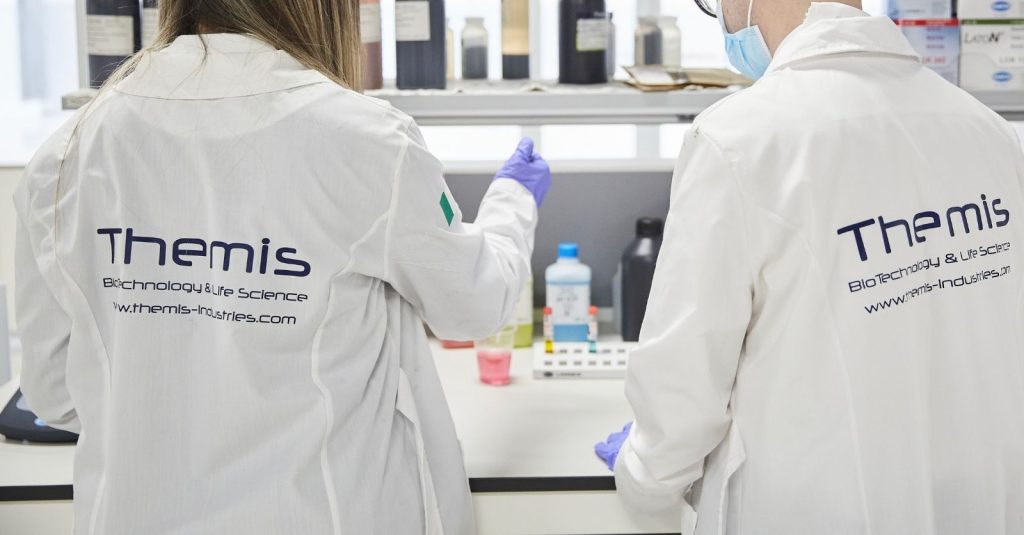
Why waste recovery is a strategic lever today
Wastewater, sludge and waste are part of everyday life in many manufacturing companies. But today, they are no longer just an ‘environmental issue’: they affect costs, logistics, operational continuity and the risk of non-compliance. At the same time, the growing focus on ESG and sustainability is changing the expectations of supply chains and stakeholders, transforming waste management into an indicator of reliability and industrial capacity.
Waste can be transformed into new business opportunities through resource recovery and waste valorisation.
The hidden cost of water: transport, storage, contingency management
Talking about wastewater often means talking about volumes. And volumes bring complexity: more storage, more handling, more transport, more exposure to unforeseen events.
In operational and economic terms, wastewater management can affect:
- unloading and treatment costs, linked to volume and characteristics of the matrix;
- transport and disposal costs, often influenced by emergencies and operational windows;
- risks of downtime or inefficiencies, when management becomes a bottleneck;
- loss of resources (water and potential value), when waste remains only a cost.
Regulatory pressures and supply chain expectations: compliance and reputation
The transition from ‘obsolete’ models to more efficient and sustainable solutions is being accelerated by regulations: in many sectors, waste and wastewater management is increasingly linked to compliance requirements, authorisations and traceability. But the pressure is not only coming from regulatory bodies. Today, wastewater and waste management is also monitored by customers, industrial groups and supply chains, with more frequent audits and demands for traceability and continuous improvement. In this context, “fragile” management exposes companies to risks: not only penalties, but also operational disruptions, authorisation blocks and reputational impacts.
Compliance, therefore, is not an isolated requirement: it is part of industrial stability and competitiveness.
From “managing” to “recovering”: when sustainability and operational efficiency coincide
Changing perspective means shifting from viewing waste as an inevitable cost to treating it as a flow to be optimised. In other words, when you reduce what “weighs” (in volume and complexity), sustainability and efficiency cease to be two separate objectives. They become the same direction of work.
WRT Themis: technology that transforms waste into new resources
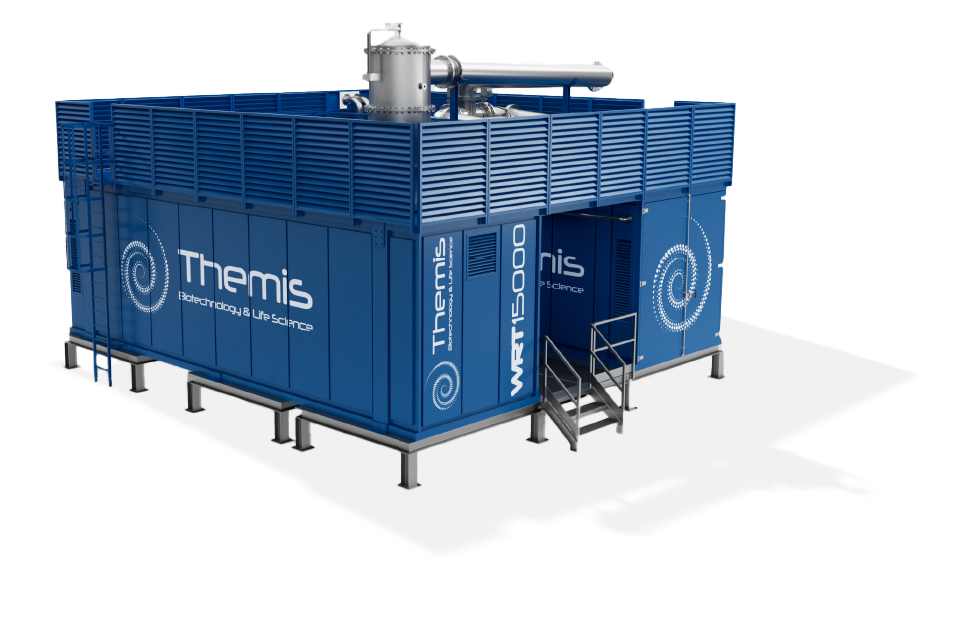
WRT is the innovative technology designed by Themis to address a very concrete need: not only volume reduction, but also the recovery and valorisation of waste in line with objectives and the production context.
The principle is clear: process the input matrix to obtain two outputs:
- distilled water, recoverable where compatible with the process and applicable requirements;
- a stabilised dry residue that is easier to handle and manage than the original stream and potentially suitable for recovery processes, depending on the characteristics of the matrix and regulatory conditions.
When envisaged in the project, integration with an enzyme line developed at Themis can help optimise output quality and enable sustainable applications, such as the production of fertilisers and biostimulants, where technically and normatively applicable.
The advantages of WRT
WRT is designed to generate tangible benefits on multiple levels, from day-to-day operations to sustainability goals.
- Operational advantages. With WRT, management becomes simpler and more predictable: less pressure on storage, fewer movements, more controllable logistics and more linear planning, with less exposure to emergencies and variability.
- Economic advantages. Operational simplification translates into more controllable costs. Furthermore, where available, integration with residual heat already present in the plant (such as hot water or condensate returns) can help improve the overall energy balance of the system. The dry residue obtained during treatment can enable downstream recovery processes, depending on the characteristics of the matrix and the applicable requirements.
- Sustainability & compliance. WRT adopts a waste recovery approach: water recovery where compatible, more manageable and traceable outputs, and potential reduction of indirect impacts related to logistics and management.
Sectors and applications: where waste transformation generates more value
WRT is designed to manage complex matrices in different industrial contexts. Depending on the matrix and the customer’s objectives, the application changes, but the logic remains the same: to simplify management and enable a waste recovery approach.
Industry: complex wastewater, sludge, liquid waste
In industrial settings, such as the tanning or pharmaceutical sectors, WRT supports the management of sludge and wastewater from production processes and treatment plants, with the aim of reducing the volumes handled and achieving a more stable and manageable output over time.
Where odour and sewage management are critical issues, transforming the matrix into two fractions (reusable water and stabilised dry residue) allows for more controllable management, with water recovery where compatible and greater traceability of the final products.
Agri-food: more stable management of wastewater and process waste
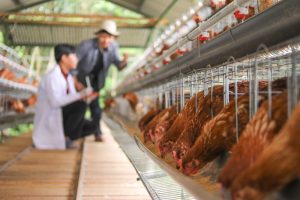
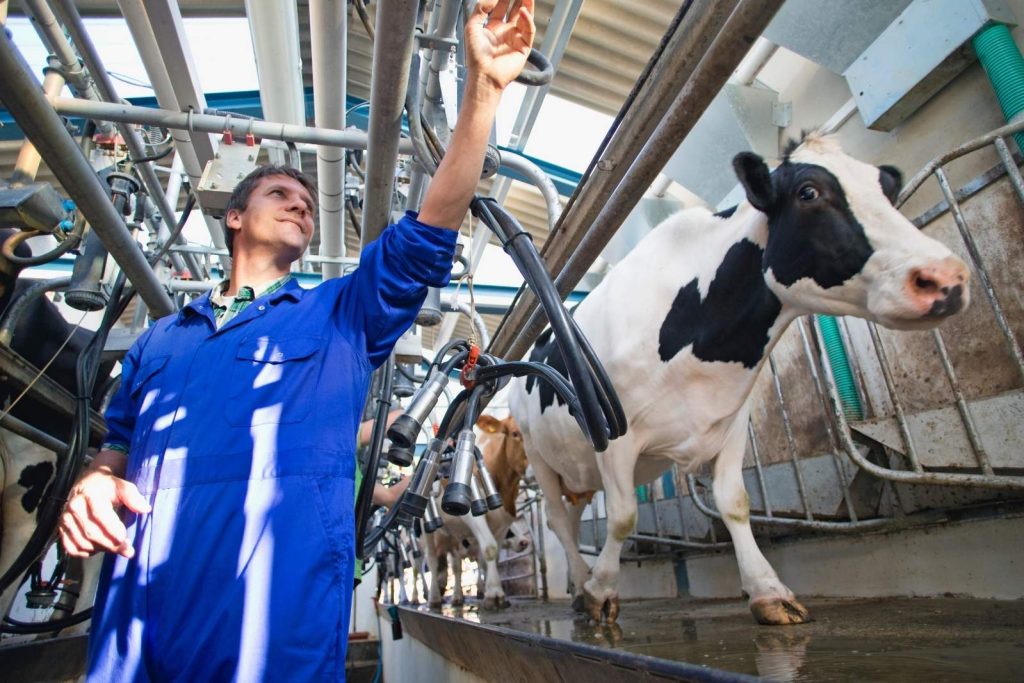
In the agri-food, dairy, meat and fish sectors, flows can be variable and linked to seasonality and production cycles. WRT helps to make the management of waste and residues more predictable, reducing operational complexity and logistical challenges. Depending on the matrix and objectives, the system can be evaluated for the treatment of waste and by-products typical of various processes: in dairy (whey, brine and organic residues), in fish (viscera, skin and scales) and in the meat supply chain (fat and organic residues). Always with the same logic: reducing volumes and obtaining more manageable outputs.
Animal husbandry and biogas: more manageable and less impactful digestate/slurry
In the livestock and biogas sectors, the impact of volumes on storage and logistics is often crucial. WRT can be considered as a solution to reduce the operational pressure associated with the management of digestate and waste water, improving overall management.
Engineering and tailor-made approach, from testing to turnkey solutions
Every Themis WRT solution is based on a simple principle: no two matrices are alike. That is why Themis works with a tailor-made approach, defining the solution based on objectives, site constraints and wastewater characteristics.
Analysis and objectives: what do you want to achieve
The first step is to frame the problem in technical and operational terms: volumes, variability, plant constraints, objectives (reduction, recovery, stability) and applicable requirements. Themis works with the client to analyse the critical points of management and creates a tailor-made action plan.
Testing and validation: preliminary trials and pilot plants to reduce risk
Alongside design, Themis places particular importance on testing and validation activities (including on pilot plants) to verify performance, configuration and expected output in real-world conditions. This is a key step in transforming a hypothesis into an industrial solution and reducing operational risks prior to delivery.
Turnkey plant: design, development and testing
Themis oversees the entire process: analysis, engineering, construction, testing and commissioning of the plant, with support and maintenance services to ensure operational continuity and reliability over time.
WRT fits into Themis’ vision of a more circular industry: reducing waste, recovering resources where possible, and making processes more manageable. It is not just a technology, but a more efficient and measurable way of dealing with wastewater and waste.
When waste management and waste recovery are properly integrated, sustainability and efficiency cease to be separate objectives and become a single direction of work, with concrete benefits in terms of operations, costs and continuity.
Want to find out if WRT is right for you?
The most effective way to evaluate this is to start with a technical assessment and, where necessary, preliminary/pilot tests on the matrix. Contact Themis to analyse your scenario and define a tailor-made solution.