Food Waste, Wasted Resources, and New Solutions
The issue of food waste is one of the great contradictions of our time: on the one hand, millions of tons of food are thrown away every year; on the other, billions of people suffer from hunger or lack access to an adequate diet. But waste isn’t just about visible food: every piece of food wasted also represents a waste of natural resources—water, energy, soil, and human labor—used in its production. In this context, it becomes urgent to rethink the very concept of “waste,” transforming it into a resource. A prime example? Beer residues, known as Brewer’s Spent Grains (BSG).
What are Brewer’s Spent Grains?
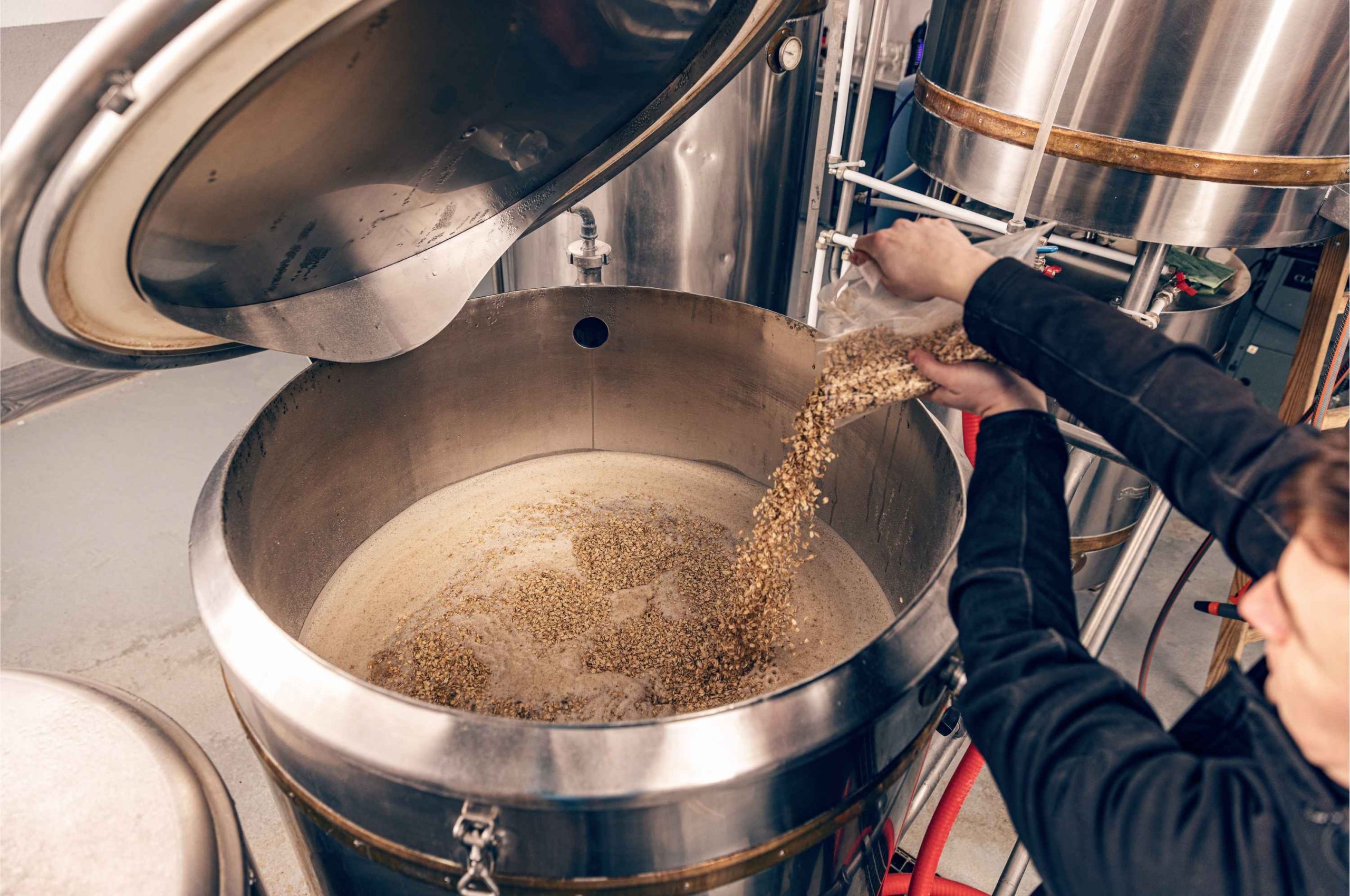
During the brewing process, malted grains (primarily barley) are used to extract fermentable sugars, which are used to produce alcohol and flavours. At the end of this process, all that is left from the cereals is a wet and dense mass: BSGs
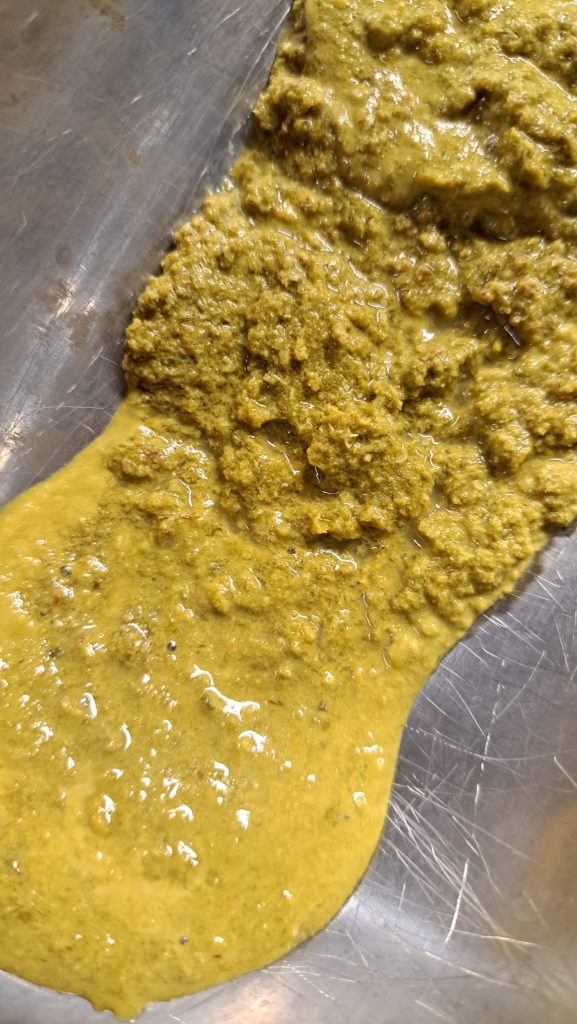
Even though they have already “given their best” in terms of sugar, these residues retain a surprising nutritional profile: they are rich in fiber, protein, and bioactive compounds. The problem? They are currently considered a low-value byproduct, often destined for composting, animal feed, or disposal. Yet, with the right technologies, they can become functional and sustainable food ingredients.
What’s in BSG? An exceptional nutritional profile
BSGs are far from being waste: they are a true concentrate of nutrients. Scientific studies show that, when processed correctly, they provide an ideal base for the formulation of functional foods, protein products, and dietary supplements.
The main components include:
- Insoluble fibers such as cellulose, hemicellulose, and lignin, which promote gut health and a feeling of fullness
- High-quality plant-based protein, rich in essential amino acids
- Vitamins and minerals, especially B vitamins (B1, B2, B6), iron, and magnesium
- Polyphenols and antioxidants, with potential anti-inflammatory and protective effects
- Fatty acids and bioactive compounds, beneficial for metabolic health
All of this makes them ideal for nutraceutical, food, and even therapeutic applications, in a context where demand for plant-based ingredients is constantly growing.
A genuine interest on the part of UNICEF and the humanitarian community
This focus on protein quality and ingredient safety has attracted the attention of major international agencies. In 2022, the Codex Alimentarius—the set of international standards for food safety and quality recognized by the FAO and WHO—updated the guidelines for Ready-to-Use Therapeutic Foods (RUTF)—life-saving products for the treatment of acute malnutrition—establishing that at least 50% of the protein may come from plant sources, including grains and legumes, provided they meet high nutritional standards.
In fact, UNICEF, one of the world’s largest purchasers of RUTF, is promoting the local production of these therapeutic foods in various African countries: the goal is to strengthen self-sufficiency, reduce transportation times and costs, and ensure optimal nutritional standards directly in areas in need.
The technological challenge: how to preserve the value of the BSG
Despite their extraordinary nutritional potential, brewer’s spent grains (BSG) present a number of technological challenges that limit their large-scale reuse, particularly in human food applications.
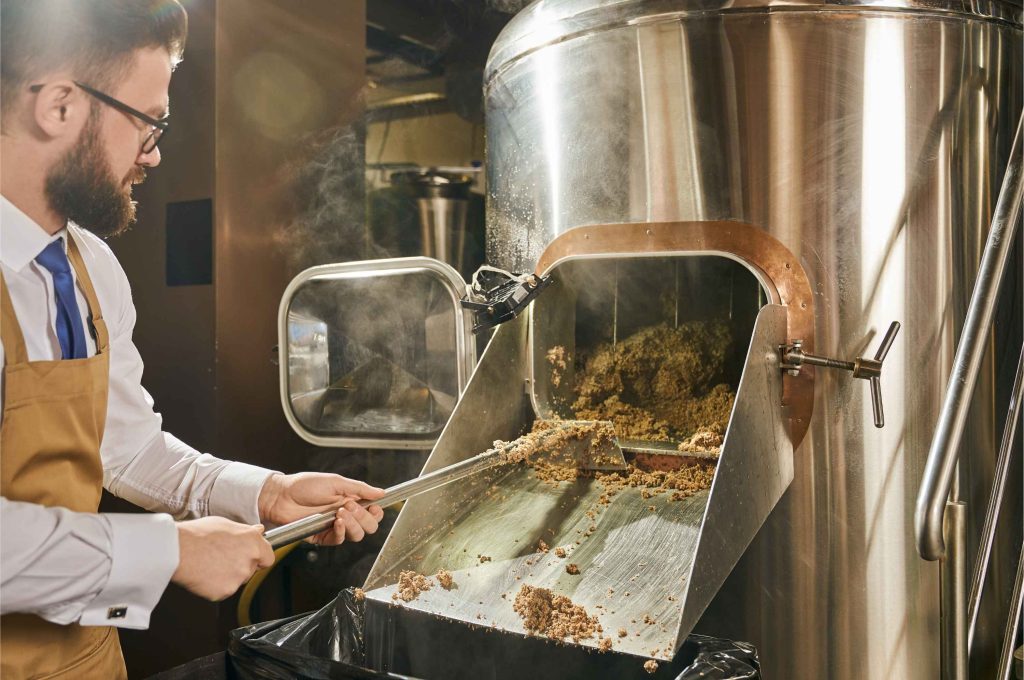
The main problem is their physical and microbiological instability, which makes them difficult to store and process.
- High perishability: BSGs contain between 70% and 80% water. This makes them extremely susceptible to spontaneous fermentation and contamination, even just a few hours after production, resulting in the development of unpleasant odors.
- Microbiological risks: Without prompt treatment, mold, bacteria, and mycotoxins can develop, completely compromising the product’s food safety.
- Difficult and expensive to transport: their high water content makes them heavy and bulky, increasing logistics costs and limiting their transport over long distances.
- The presence of lignin and complex fibers: these structural components make it difficult to extract proteins and other nutrients, requiring targeted and gentle processing.
A transformation that is possible, but by no means trivial
In order to transform them into safe, stable, and high-value ingredients, specific processes must be developed. The goal is to remove water without “cooking” the product, so as not to degrade the proteins, amino acids, or bioactive compounds present in BSGs. The treatment must be:
- Gentle, to preserve the nutritional properties
- Efficient, to ensure stability and shelf life
- Scalable, to enable practical industrial applications
The solution is to invest in technology capable of transforming and adding value to BSGs.
Themis WRT: Smart Low-Temperature Dehydration
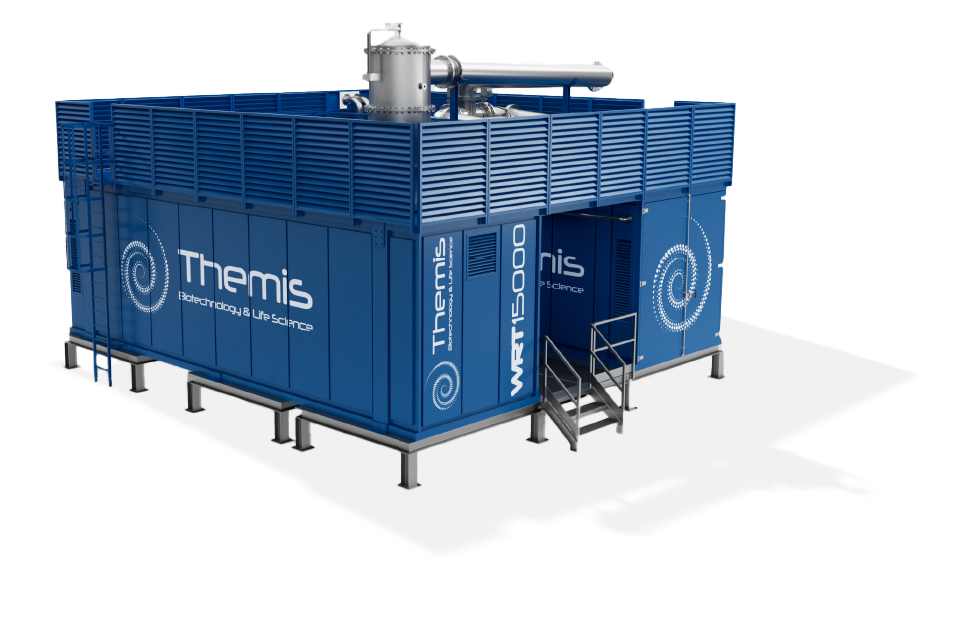
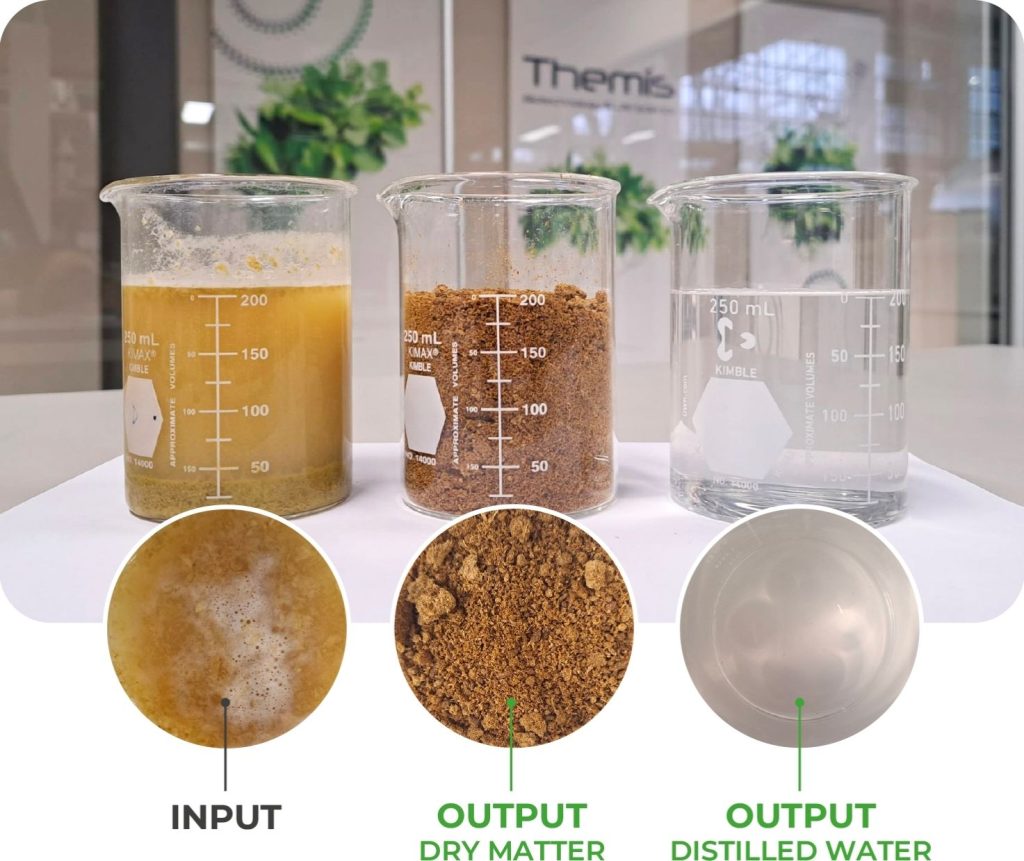
Themis WRT is our proprietary technology capable of performing low-temperature dehydration, developed specifically to process moist food byproducts with high nutritional value. It is based on a simple yet powerful principle: removing water without altering the molecular properties of the nutrients. This approach results in a stable, safe, and nutritionally intact product, ready for use across various industries.
The main benefits:
- Drying at temperatures below 60°C, which prevents damage to proteins, amino acids, and antioxidants
- Preservation of molecular structure, ideal for sensitive food applications
- Free of chemical solvents, for a clean, safe, and sustainable process
- System modularity, adaptable to existing facilities (breweries, food processing plants)
- Energy efficiency, with lower energy consumption compared to conventional methods such as spray drying or industrial ovens
From Waste to Ingredient: Practical Applications
Thanks to processing with Themis WRT, BSGs become a versatile ingredient suitable for a wide range of applications. Here are a few examples:
- Functional flours with high fiber content and a “toasted” flavor, ideal for bread, pasta, and snacks
- Plant-based protein blends, for sports supplements or high-protein products
- A base for fermented foods, such as vegan burgers, spreads, or ready-to-eat meals
- Therapeutic food products (RUTF) to support nutrition programs in areas affected by malnutrition
- High-quality pet food and animal feed, thanks to the high protein content and natural ingredients
All of this starts with something that, until yesterday, was considered waste.
Un modello replicabile e sostenibile di economia circolare
The valorization of BSG is a perfect example of the circular economy in action. Transforming industrial waste into an ingredient for human consumption is a process with a significant positive impact:
- Environmental: Reduced emissions, waste, and use of new resources
- Social: Access to new ingredients is created, even in fragile contexts (e.g., Sub-Saharan Africa)
- Cost-effective: value is generated from a raw material at (almost) zero cost
- Ethical: restoring dignity to what used to be thrown away
Our goal is to make this model replicable for other food industry waste as well. The BSG is just the starting point.
FAQ
What are Brewer’s Spent Grains (BSG)?
Brewer’s spent grains are the solid residue left over after the extractable sugars have been removed from malted grains during the brewing process.
What nutrients are found in brewer’s spent grains?
BSGs have a very promising nutritional profile: insoluble fiber, plant-based protein, B vitamins, minerals such as iron and magnesium, as well as polyphenols, antioxidants, and other bioactive compounds. For this reason, they are considered a promising foundation for functional ingredients and nutraceutical applications.
Can beer byproducts be used as food ingredients?
Yes, but only if processed using appropriate methods. BSGs can become stable, valuable ingredients for functional flours, protein blends, bases for fermented foods, and other applications
What are the benefits of reusing BSGs from a circular economy perspective?
Making the most of BSGs means reducing waste, emissions, and the consumption of new resources, but also generating economic value from waste.
Why is low-temperature dehydration important?
Because it helps avoid overly aggressive processing. Drying at temperatures below 60°C helps preserve proteins, amino acids, and antioxidants, thereby maintaining the nutritional value of the processed material. This is crucial when the goal is not merely to dispose of the byproduct but to add value to it.